
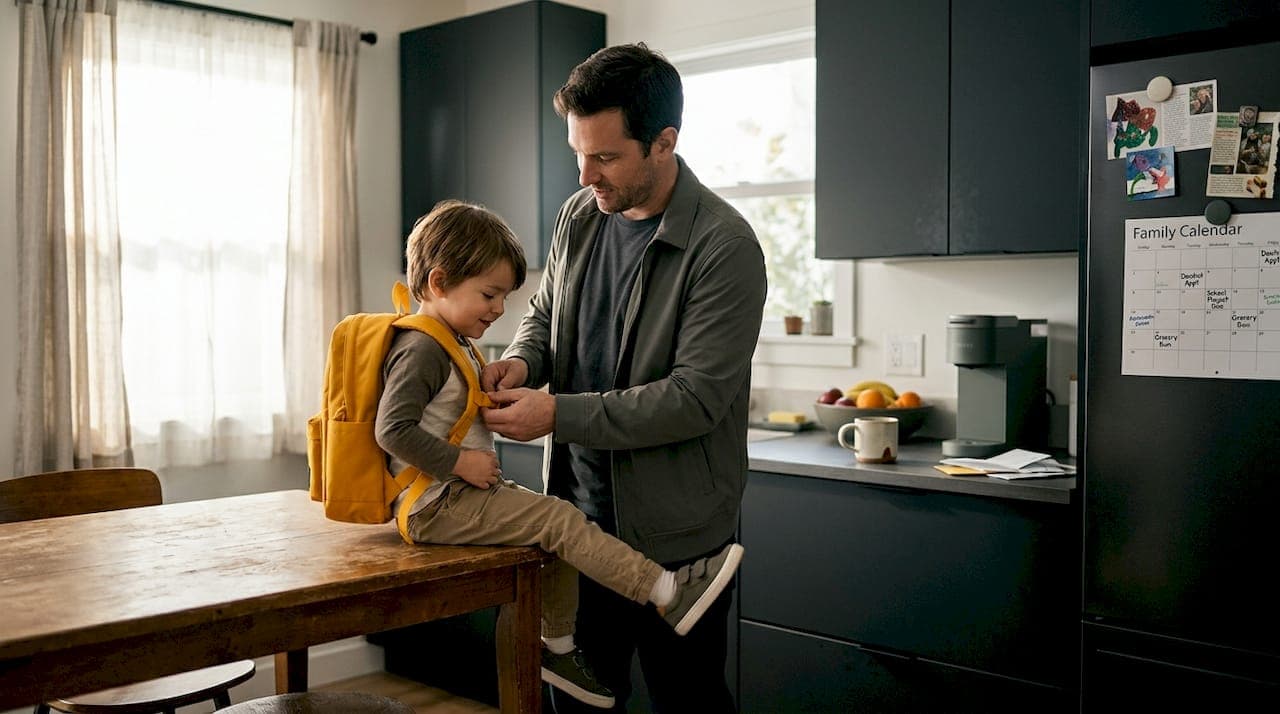
Every year, 37 children on average die from pediatric vehicular heatstroke in the United States, and in more than half of those cases, a caregiver simply forgot the child was there. These are not neglectful parents. They are exhausted, overwhelmed people whose memory systems failed them at the worst possible moment. This guide breaks down why those failures happen, what the research says about preventing them, and how you can build a layered reminder system that actually works in the chaos of real family life.
Table of Contents
- Why reminders matter: Understanding memory lapses and real risks
- Types of reminders: Manual, digital, and in-vehicle solutions
- What the data shows: Effectiveness of different reminder strategies
- Building safety habits: Practical steps for parents and caregivers
- Our take: The uncomfortable truth, layers beat any one reminder
- Bring reminder safety into your daily routine
- Frequently asked questions
Key Takeaways
| Point | Details |
|---|---|
| No one is immune | Memory lapses can happen to any parent, so proactive reminders are vital. |
| Multiple reminder types | Mixing manual habits, technology, and vehicle systems is safest. |
| Science-backed impact | Reminders reduce dangerous lapses and improve safety behaviors significantly. |
| Layered approach wins | Redundancy—using several alerts—offers the strongest protection. |
| Practical habit tips | Simple daily routines can easily incorporate effective reminder systems. |
Why reminders matter: Understanding memory lapses and real risks
Most parents assume that forgetting a child in a car is something that happens to other people. People who are distracted, irresponsible, or simply not paying attention. The science tells a very different story, and understanding it is the first step toward protecting your own family.
The brain relies on two types of memory: retrospective memory (remembering past events) and prospective memory (remembering to do something in the future). Prospective memory is far more fragile. It is the kind of memory that fails during routine changes and stress, and it is exactly the type that governs whether a parent remembers to check the back seat before walking into work.
Forgotten baby syndrome is a term coined by researchers to describe what happens when a disruption in routine overrides a parent's habitual memory. Here is the mechanism in plain terms: your brain runs on autopilot for familiar tasks. When you always drop your child off before going to work, that task becomes automatic. But if your partner usually does the drop-off and today you are covering for them, your brain may not register the change. It follows the old script, parks the car, and walks inside. The child is still in the back seat.
Several factors make this more likely:
- Sleep deprivation, which is nearly universal in parents of young children, directly impairs the prefrontal cortex, the part of the brain responsible for monitoring and updating plans.
- High cognitive load, such as managing a work crisis or a sick family member, consumes the mental bandwidth needed to catch routine deviations.
- Routine disruptions, like a schedule change, a new job, or an unusual drop-off location, break the mental cues that normally trigger memory.
- Emotional stress, including relationship tension or financial pressure, narrows attention in ways that make it easy to miss critical steps.
"It could happen to any of us. Sleep deprivation, stress, and changes in routine are the real culprits, not a lack of love or care." This is the core message safety researchers want every caregiver to internalize.
Understanding how reminders help parents counter these lapses is not about admitting failure. It is about being honest about how human memory actually works and building systems that compensate for its real limitations.
Types of reminders: Manual, digital, and in-vehicle solutions
Once you accept that memory alone is not reliable enough, the next question is practical: what kinds of reminders actually exist, and how do they work? There are three main categories, each with distinct strengths and weaknesses.
Manual reminders are low-tech strategies that create a physical or behavioral cue. Placing your phone or purse in the back seat next to your child forces you to open the rear door before you can go anywhere. Setting up a call-back agreement with your childcare provider, where they contact you if your child has not arrived within a set window, creates a human safety net. Leaving a stuffed animal in the front seat as a visual reminder when your child is in the back is another widely recommended tactic. These methods cost nothing and can be started today.
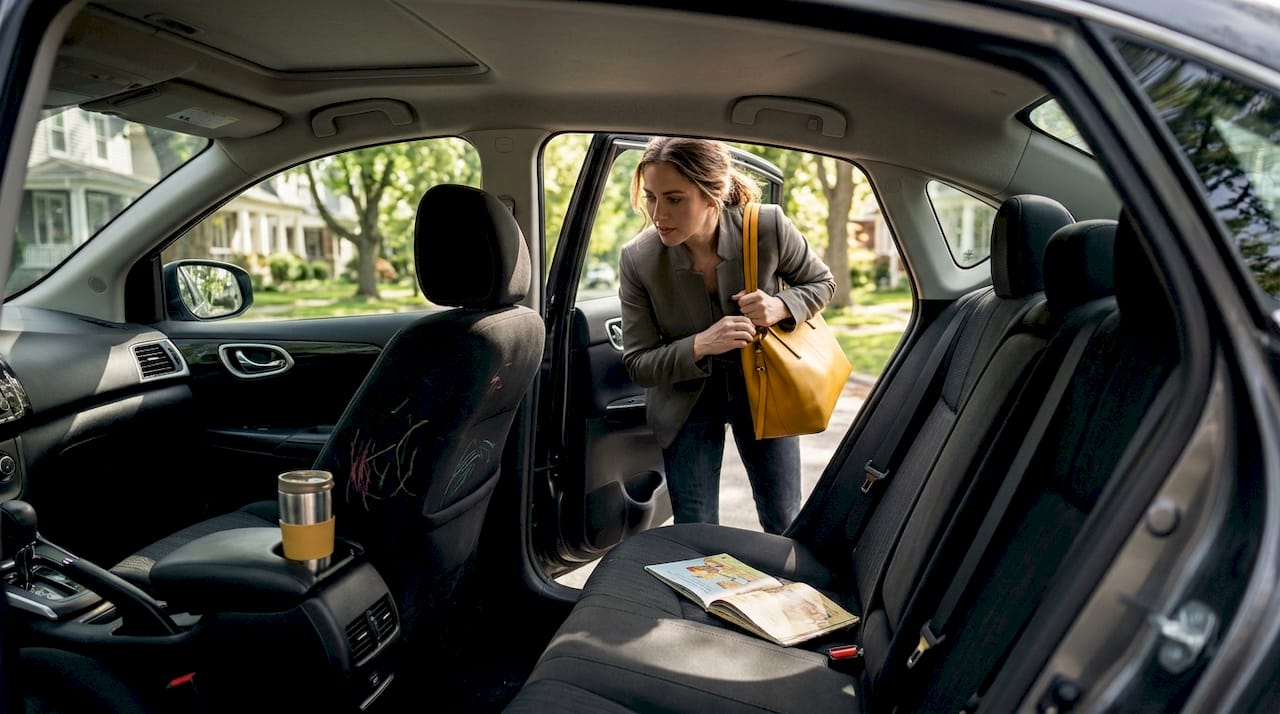
Digital reminders include mobile apps, calendar alerts, and scheduled text messages. These are more customizable and harder to ignore than passive physical cues. A well-timed push notification as you pull into a parking lot can interrupt autopilot thinking at exactly the right moment. Integrating digital reminders into your existing routine, whether through a dedicated app or your phone's native calendar, adds a layer of protection that does not depend on your own memory to initiate.
In-vehicle reminder systems have become increasingly standard. Rear seat reminder systems use door-sequence logic to detect when a rear door was opened before or during a trip and then prompt the driver to check the back seat after the vehicle is turned off. Most major automakers now include some version of this technology as standard in 2025 and 2026 model year vehicles. More advanced systems use pressure sensors or radar to detect the presence of an occupant regardless of whether a door was used.
Here is a side-by-side look at how these options compare:
| Reminder type | Cost | Reliability | Works without action | Best for |
|---|---|---|---|---|
| Manual (item in back seat) | Free | Moderate | No | Daily routine reinforcement |
| Call-back agreement | Free | High | Yes (childcare calls you) | Backup when drop-off changes |
| Mobile app alerts | Low to free | High | Yes (push notifications) | Busy, tech-comfortable parents |
| In-vehicle door-logic system | Included in new cars | Moderate | Yes | Standard daily commutes |
| Advanced sensor detection | Higher cost | Very high | Yes | Edge cases, all scenarios |
Pro Tip: Set your phone's reminder to trigger when you arrive at a specific location, not just at a set time. Location-based alerts fire at the exact moment you park, which is when the check-the-back-seat habit needs to kick in.
Here is a simple numbered approach to layering these reminder types into a working system:
- Choose one physical cue (purse, bag, or a specific item always placed in the back seat with your child).
- Set up a location-based phone alert for your workplace or any frequent destination.
- Confirm your childcare provider has your contact information and a clear call-back policy.
- If your vehicle has a rear seat reminder, make sure it is enabled in the settings menu.
- Review and update your system any time your routine changes significantly.
What the data shows: Effectiveness of different reminder strategies
Knowing your options is useful. Knowing which ones actually reduce risk is better. Let us look at what the research says.
In pediatric clinical settings, daily reminder messages significantly reduced missed care when combined with staff education, showing that even simple, consistent prompts improve safety adherence in high-stakes environments. This finding matters for parents because it confirms that reminders do not need to be elaborate to be effective. Consistency is the key variable.
The numbers are even more striking for child passenger safety specifically. A clinical trial found that mobile apps improved safety adherence by up to 40% over a 12-month period when they combined scheduled reminders with motivational counseling. That is a substantial improvement from a tool most parents already carry in their pocket.
Here is a summary of what the data shows across reminder types:
| Strategy | Evidence of effectiveness | Key limitation |
|---|---|---|
| Education alone | Modest short-term gains | Fades without reinforcement |
| Manual cues (item in back seat) | Proven effective anecdotally | Requires habit formation |
| Daily reminder messages | Significant reduction in missed care | Needs consistent setup |
| Mobile apps with motivational support | Up to 40% improvement at 12 months | Requires app engagement |
| In-vehicle sensor systems | High for standard scenarios | Gaps in edge cases (self-entry) |
A few findings stand out as particularly important for caregivers:
- Personalized reminders outperform generic ones. A reminder that says "Did you check the back seat?" is more effective than a generic calendar ping because it names the specific action.
- Motivational framing matters. Apps that frame reminders around the parent's own goals and values, rather than fear-based messaging, produce longer-lasting behavior change.
- Hybrid approaches beat single methods. Advanced detection solutions from researchers at Children's Hospital of Philadelphia confirm that no single technology covers every scenario. Combining approaches closes the gaps that any one method leaves open.
The data is consistent: the more touchpoints you have in your reminder system, the more resilient it becomes to the inevitable disruptions of real family life.
Building safety habits: Practical steps for parents and caregivers
Research and awareness are only useful if they translate into action. Here is how to build a personalized reminder system that fits your actual life, not an idealized version of it.
Start by mapping your current routine. Write down every step of a typical morning: who wakes up first, who handles drop-off, what route you take, where you park. This exercise reveals the specific moments where a memory lapse is most likely. For most families, the highest-risk window is the transition from car to destination, especially when the routine has changed that day.
Next, blending reminders and technology into that mapped routine is far more effective than adding reminders on top of a routine you have not examined. If you know you always check your phone when you park, that is the perfect trigger point for a location-based alert. If you always grab your bag from the passenger seat, that is where the physical cue belongs.
Here is a practical numbered checklist for building your system:
- Identify your highest-risk moments. These are usually routine changes, early mornings after poor sleep, or days when someone else normally handles drop-off.
- Choose at least two reminder types from different categories. One physical, one digital, or one digital and one human (call-back agreement).
- Set up location-based alerts on your phone for every destination where you regularly park after transporting your child.
- Establish a call-back protocol with your childcare provider. Make sure they know to contact you within 15 minutes if your child has not arrived.
- Enable any rear seat reminder features in your vehicle. Check your owner's manual or infotainment settings if you are unsure whether your car has this feature.
- Review your system every time your schedule changes. A new job, a new childcare arrangement, or even a new car is a trigger to revisit and update your reminders.
Pro Tip: Tell another trusted adult, a partner, a grandparent, or a close friend, about your reminder system. When someone else knows the plan, they become an accidental accountability partner. A quick "did you drop off okay?" text from a partner adds a human layer that no app can fully replicate.
No single technology is perfect, and the same is true of habits. Combining vehicle reminders, apps, personal habits, and a human check-in creates a system where one failure does not automatically become a tragedy.
Our take: The uncomfortable truth, layers beat any one reminder
Here is what most safety guides do not say plainly enough: every reminder system has a failure mode. Door-logic vehicle reminders miss cases where a child climbs in without the rear door being opened, which accounts for a meaningful percentage of incidents. Apps only work if you engage with them. Physical cues only work if you form the habit. Human call-backs only work if someone actually makes the call.
The uncomfortable truth is that the parents who have experienced these tragedies were not, in most cases, doing nothing. Many had some system in place. What they lacked was redundancy, overlapping layers that could catch a failure in any single method.
Creating layers of reminders is not paranoia. It is the same logic that makes airplanes safe: not one safety system, but multiple independent systems that each catch what the others miss. A checklist culture in aviation did not emerge because pilots are careless. It emerged because even highly trained, deeply motivated professionals make errors under stress and fatigue. Parents are operating under conditions that would challenge any professional.
The reframe we want to offer is this: building a layered reminder system is an act of love and self-awareness, not an admission of inadequacy. It says, "I know how my brain works under pressure, and I am not leaving my child's safety to chance." That is exactly the mindset that keeps families safe.
Bring reminder safety into your daily routine
Building a reliable reminder system does not have to be complicated, but it does need to be intentional. The research is clear: combining habits, technology, and human check-ins is the most effective approach available to parents and caregivers today.
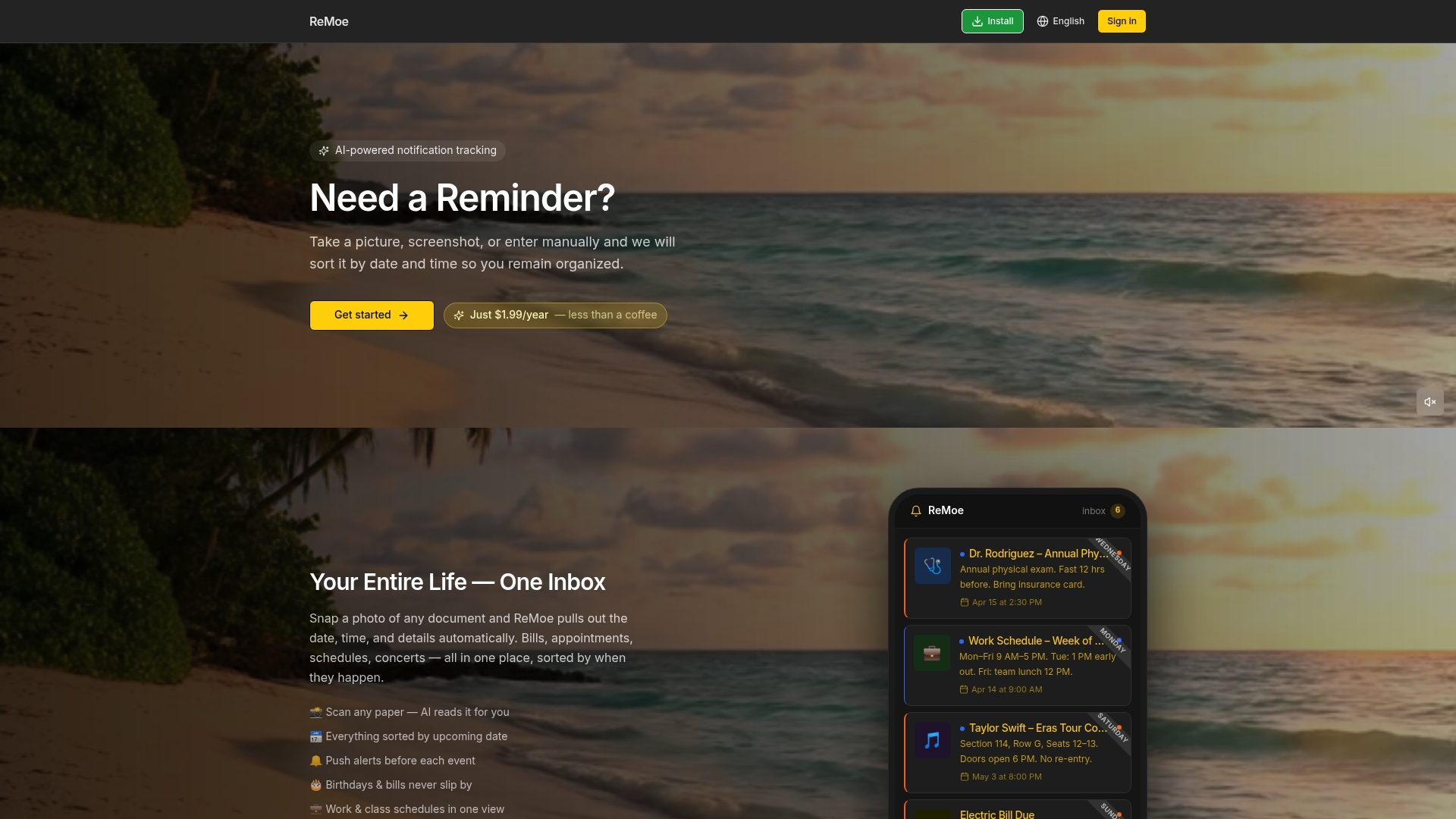
The ReMoe reminder platform is built for exactly this kind of layered, personalized approach. Whether you need location-based alerts for school drop-off, medication reminders, bill due dates, or a simple daily check-in prompt, ReMoe brings all of it into one place. You do not need five different apps for five different responsibilities. One organized system, built around your real routine, is far more likely to stick and far more likely to protect the people you love most.
Frequently asked questions
What makes parents forget a child in the car?
Prospective memory failures, triggered by stress, sleep deprivation, or changes in routine, can cause even devoted parents to forget a child is in the back seat. This is a neurological vulnerability, not a character flaw.
Do car reminder systems work every time?
Door-logic systems miss edge cases where a rear door was not used, such as when a child climbs in through the front, so advanced sensor-based systems provide better coverage for those scenarios.
How do mobile apps boost child safety?
Apps that combine scheduled reminders with motivational support improve safety adherence by up to 40% over 12 months, making them one of the most evidence-backed tools available to parents.
Is just one reminder technique enough for safety?
No. Combining vehicle reminders, apps, and personal habits is the most reliable approach because each method covers the gaps that others leave open, especially during disrupted routines.