

Keeping up with everything you're responsible for, from school pickups and medication schedules to bill due dates and doctor appointments, can feel like running a marathon with no finish line. When your mental to-do list overflows, things fall through the cracks, and the stress compounds fast. A daily habit checklist is one of the most underrated tools a parent or caregiver can have. It's not about being rigid or overly organized. It's about building a reliable system that holds your life together so your brain doesn't have to.
Table of Contents
- What makes an effective daily habit checklist?
- Top daily habit checklist essentials for parents and caregivers
- Leveraging proven strategies: Tiny Habits, Atomic Habits, and MCII
- Checklist on autopilot: Tools and apps to automate your daily habits
- Expert perspective: Why simple systems beat complex routines every time
- Take your habits further with effortless automation
- Frequently asked questions
Key Takeaways
| Point | Details |
|---|---|
| If-then plans accelerate habits | Implementation intentions can dramatically speed up habit formation versus hoping routines stick on their own. |
| Checklist personalization is key | Tailoring checklists to your unique daily roles and updating weekly is essential for impact and consistency. |
| Tiny wins drive progress | Celebrating even small daily achievements reinforces new habits and keeps you motivated. |
| Digital tools boost reliability | Automating reminders and habit tracking with apps reduces your mental load and enhances follow-through. |
What makes an effective daily habit checklist?
Not every checklist is created equal. A sticky note with ten vague tasks is not the same as a thoughtfully structured daily habit checklist. The difference between a list you actually use and one you abandon by Wednesday comes down to three things: clarity, context, and realistic scope.
Clarity means every item on your list is specific enough to act on immediately. "Take care of health" is not a checklist item. "Give Emma her allergy medication at 7 a.m." is. When your tasks are concrete, you spend zero mental energy figuring out what they mean.

Context means each habit is tied to a specific time, place, or trigger in your day. This is where research-backed planning really shines. Implementation intentions use an "if-then" format, such as "If it's 7 a.m. and I'm in the kitchen, then I give Emma her medication," to dramatically speed up habit formation. Studies show this approach can build habit strength in as little as 3 weeks, compared to the commonly cited average of 66 days.
Realistic scope means your checklist matches what you can actually do in a day. Overloading your list sets you up for guilt and abandonment. Start lean. Five to eight daily habits done consistently will always outperform twenty habits done sporadically.
"The best habit system is the one you'll actually use tomorrow morning, not the one that looks perfect on paper."
A powerful layer to add on top of if-then planning is MCII, which stands for Mental Contrasting with Implementation Intentions. You picture the positive outcome you want (a calm, organized morning), then honestly identify the obstacles (the chaotic rush hour), and then create your if-then plan to handle those obstacles. This combination has been shown to significantly boost goal attainment compared to positive thinking alone.
- Write each checklist item as a specific, observable action
- Attach every habit to an existing anchor in your day (morning coffee, school drop-off, bedtime)
- Keep your daily list to 8 items or fewer to start
- Review and adjust every Sunday night for the week ahead
Pro Tip: Write your if-then plans directly on your checklist next to each habit. Instead of just "take vitamins," write "When I pour my morning coffee, I take my vitamins." This tiny shift makes the habit far stickier.
Top daily habit checklist essentials for parents and caregivers
With the core ingredients clear, you'll want to see what actually goes on a robust checklist. Parents and caregivers manage a uniquely complex web of responsibilities that changes constantly. A checklist built for your life needs to reflect that complexity without becoming overwhelming.
Caregiver checklists should track vitals, medications, and handoffs on a daily, weekly, and monthly basis, and be updated weekly to reflect any changes in the person's condition or routine. This principle applies just as strongly to parents managing children's schedules, school needs, and household tasks.
Here are the core categories every parent and caregiver checklist should cover:
- Medication reminders: Specific times, dosages, and who needs what
- Meal planning and prep: Breakfast, packed lunches, and dinner planning
- Child or care recipient needs: School forms, homework checks, therapy appointments
- Household routines: Laundry cycles, bill due dates, grocery restocking
- Health and wellness: Doctor appointments, prescription refills, physical activity
- Communication tasks: Emails to teachers, calls to insurance, family updates
- Evening wind-down: Permission slips signed, bags packed, next day prep
To build a checklist that actually fits your life, follow these steps:
- List every recurring responsibility you currently manage. Don't filter yet. Just brain-dump everything onto paper or into a notes app.
- Group similar tasks by time of day. Morning, midday, afternoon, and evening clusters make your checklist easier to follow.
- Assign each task a specific trigger or anchor. Tie tasks to things you already do automatically, like waking up, eating meals, or walking through the door.
- Cut anything that doesn't need to happen daily. Weekly or monthly tasks belong on a separate list or a recurring calendar event.
- Test your checklist for one week. Note what you skipped, what felt unnecessary, and what you forgot to include.
- Revise every Sunday. Responsibilities shift. A checklist that worked last month may need updates as your child's schedule changes or a care recipient's needs evolve.
Pro Tip: Color-code your checklist by category if you use a digital tool or a printed template. Visual separation helps you scan quickly during a busy morning without reading every word.
Leveraging proven strategies: Tiny Habits, Atomic Habits, and MCII
To help you pick and stick with the right approach, let's look at the frameworks that research says work best. There are three main systems that busy parents and caregivers can realistically apply to their daily habit checklists, and each has a different strength.
Tiny Habits, developed by Stanford researcher BJ Fogg, is built on one core idea: make the behavior so small it feels almost silly. Anchor a tiny behavior (something that takes under 30 seconds) to an existing routine, then immediately celebrate when you do it. That celebration, even just a fist pump or a quiet "yes," wires the habit emotionally in a way that willpower never can. For a caregiver, this might look like: "After I pour my morning coffee, I check today's medication schedule and say 'I've got this.'"
Atomic Habits, popularized by James Clear, focuses on identity and systems. Instead of setting a goal ("I want to be more organized"), you build a system ("Every evening at 8 p.m., I review tomorrow's checklist for 5 minutes"). The identity shift is powerful: you stop saying "I'm trying to be organized" and start saying "I'm someone who reviews their checklist every night." This reframe makes it easier to stay consistent even on hard days.
MCII adds a mental layer to both approaches. Planning interventions like MCII are more effective long-term than simple positive associations because they force you to confront real obstacles and plan around them. This is especially valuable for caregivers who face unpredictable days.
| Framework | Ease to start | Speed of results | Best for |
|---|---|---|---|
| Tiny Habits | Very easy | Fast (days to weeks) | Building new micro-habits quickly |
| Atomic Habits | Moderate | Medium (weeks to months) | Overhauling your whole routine system |
| MCII | Moderate | Fast with planning | Overcoming specific recurring obstacles |
| If-Then Planning | Easy | Fast (3 weeks) | Anchoring habits to daily triggers |
"You don't rise to the level of your goals. You fall to the level of your systems." This is the core truth behind every effective daily habit checklist.
The most effective approach for most parents and caregivers is a blend: use Tiny Habits to get new behaviors started, use Atomic Habits principles to build your overall system, and use MCII when you keep hitting the same wall. No single framework is perfect for every situation, but together they cover nearly every obstacle you'll face.
- Start with one tiny habit anchored to your morning routine
- Write your checklist the night before using the Atomic Habits "evening review" system
- Apply MCII when a habit keeps getting skipped: picture the goal, identify the obstacle, write the if-then plan
Checklist on autopilot: Tools and apps to automate your daily habits
After understanding what works, let's automate it. The best daily habit checklist in the world won't help if you forget to look at it. Digital tools solve this problem by sending reminders, tracking your streaks, and integrating with your existing calendar so your habits show up where you already look.
The core features to look for in any habit checklist app include recurring reminders at specific times, visual progress tracking (streaks and completion rates), the ability to share or sync with a partner or co-caregiver, and calendar integration. Apps that automate habit reminders reduce the mental load of remembering to remember, which is exactly the kind of friction that derails busy parents.
Here's how leading digital checklist tools compare:
| Tool | Recurring reminders | Family sharing | Progress tracking | Cost |
|---|---|---|---|---|
| Remoe | Yes | Yes | Yes | Affordable |
| Habitica | Yes | Limited | Yes | Free/paid |
| Todoist | Yes | Yes | Limited | Free/paid |
| Google Tasks | Limited | No | No | Free |
| Streaks (iOS) | Yes | No | Yes | Paid |
The Tiny Habits method emphasizes that relying on willpower is far less reliable than designing your environment for success. Digital tools are an environmental design strategy. When your phone buzzes at 7 a.m. with "Emma's medication," you don't need willpower. You just need to follow the prompt.
For parents and caregivers managing multiple people's needs, the ability to share a checklist with a partner or another caregiver is a game changer. You can also explore a broader range of productivity app options to find tools that fit your specific workflow.
- Choose an app that sends push notifications at the exact times you need them
- Set up weekly recurring reviews every Sunday evening
- Use a shared checklist with your partner to avoid duplicate effort or missed tasks
- Check habit app pricing before committing to a paid tool, since many free options cover the basics well
Pro Tip: Don't use more than two apps for habit tracking. App overload creates its own kind of chaos. Pick one primary tool and use it consistently for at least 30 days before evaluating whether it's working. You can also explore an AI habit checklist setup to get started faster with smart defaults already built in.
Expert perspective: Why simple systems beat complex routines every time
Here's something most productivity advice won't tell you: the more elaborate your habit system, the more likely you are to abandon it by week three. We've seen this pattern repeatedly with parents and caregivers who come to us overwhelmed. They've built color-coded binders, downloaded five different apps, and created 30-item daily checklists. And they're more stressed than before they started.
The uncomfortable truth is that complexity feels productive but actually works against you. When your system requires too much maintenance, it becomes another task on your list. And when life gets hard (a sick child, a bad week, a family emergency), a complex system is the first thing to collapse.
The real secret to making habits stick is not finding the perfect framework. It's designing your simplest possible next action and removing every barrier between you and doing it. That might mean a three-item morning checklist instead of fifteen. It might mean one app with push notifications instead of a handcrafted planner. It might mean automation for peace of mind so your phone reminds you before you even have to think about it.
Small wins matter more than most people realize. When you check off even a tiny task, your brain releases a small dose of dopamine. That feeling is what keeps you coming back. Emotional reinforcement, not discipline, is what builds lasting habits. This is why BJ Fogg's "celebrate immediately" instruction is not just feel-good advice. It's neurologically sound strategy.
If your current system feels heavy, that's a signal to simplify, not to push harder. The goal is a daily habit checklist that runs almost invisibly in the background of your life, catching the things that matter before they fall.
Take your habits further with effortless automation
Ready to put these checklist strategies into action in your day-to-day routine? Building a solid daily habit checklist is a great start, but keeping it running consistently is where most people need support.
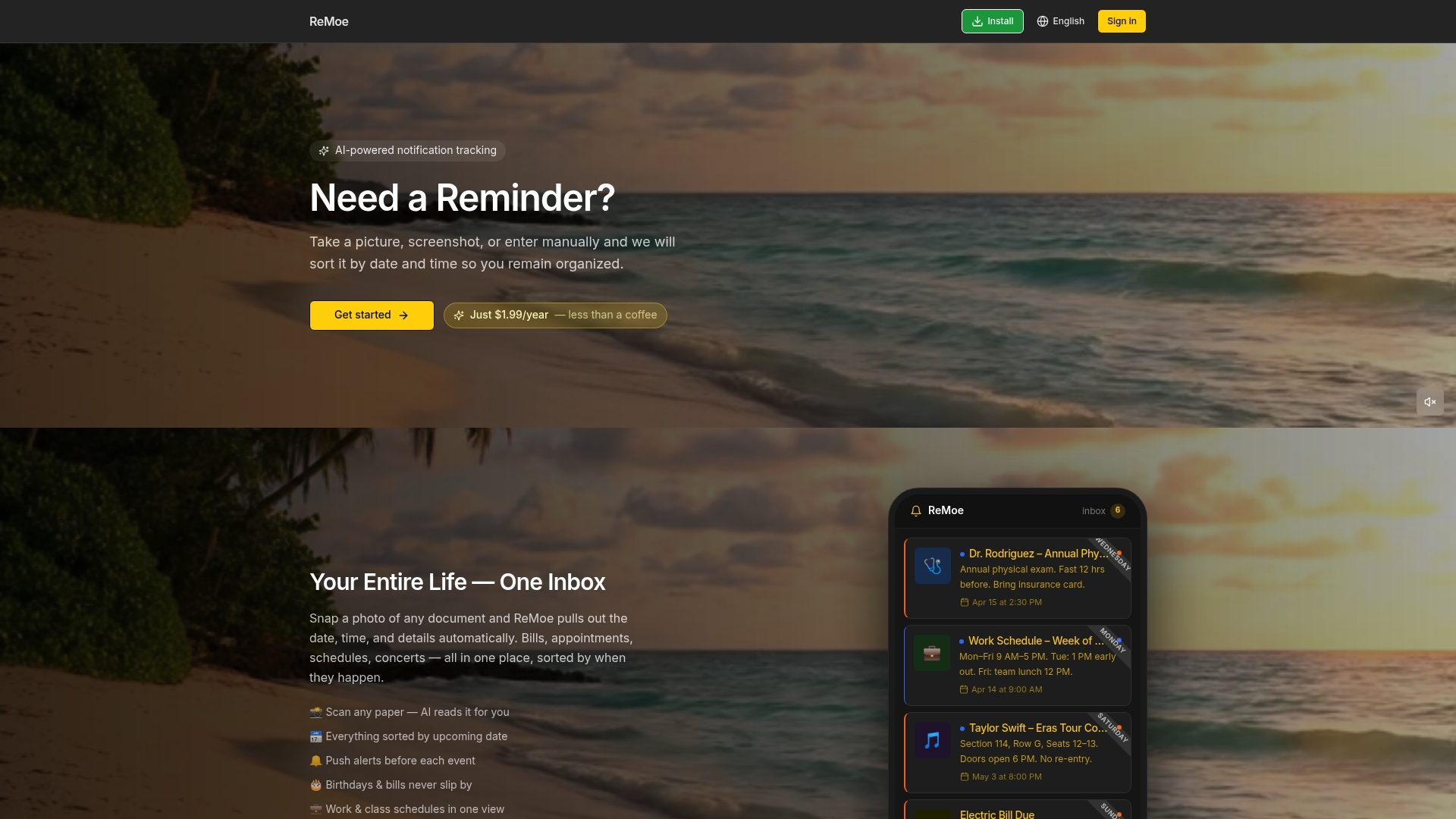
Remoe is built specifically for parents, caregivers, and anyone juggling a full life of responsibilities. It brings your medication reminders, school schedules, bill due dates, and daily habits into one place so nothing gets missed. You don't need to manage five different apps or rebuild your system from scratch. With Remoe's AI daily checklist tool, you can set up smart, recurring reminders in minutes. Check out app pricing to find a plan that fits your family's needs and start building the kind of calm, consistent routine that actually holds up on your busiest days.
Frequently asked questions
How long does it take to form a daily habit using a checklist?
With if-then planning, habit strength can increase in as little as 3 weeks, compared to the commonly cited average of 66 days. Pairing your checklist with specific implementation intentions speeds up the process significantly.
What should a daily habit checklist include for caregivers?
A caregiver checklist should cover medication, vitals, and handoffs along with appointments, meal support, and communication tasks, and it should be reviewed and updated weekly as needs change.
How do digital apps improve daily habit checklists?
Apps automate reminders, track streaks, and reduce forgotten tasks by putting your checklist where you already look, making habit success easier without relying on memory or willpower.
Is celebrating tiny wins really effective in habit formation?
Yes. Celebrating immediately after a small behavior wires it emotionally in your brain, making it far more consistent over time than discipline or motivation alone.
How often should I update my daily habit checklist?
Update your checklist weekly for changes in responsibilities or routines. A Sunday evening review takes less than five minutes and keeps your system accurate and relevant.