
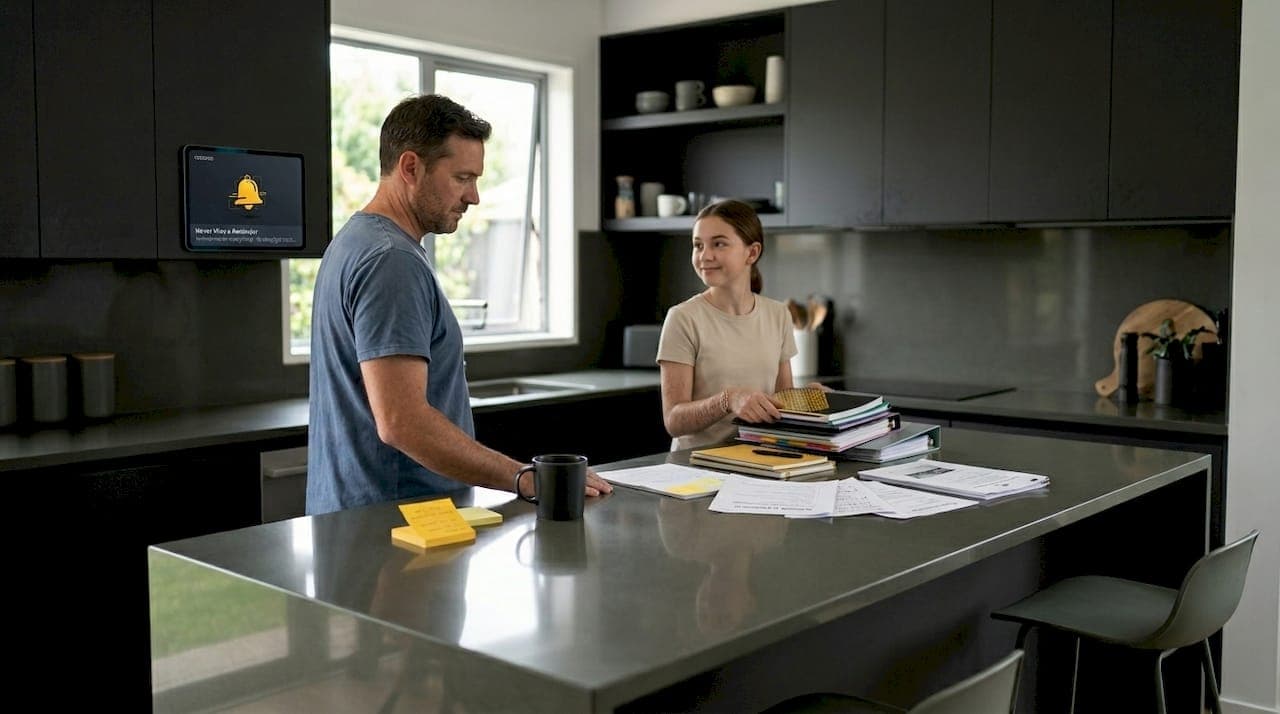
You set a reminder. It goes off. Nobody knows if it's for them. The medication sits on the counter untouched, the bill goes unpaid for another week, and the school pickup almost gets missed—again. Generic reminders fail busy households not because people are forgetful, but because a reminder without a clear owner creates confusion instead of action. When you have multiple responsibilities spread across multiple people, the only way to truly cut through the noise is to match every task to the right person through role-based reminders.
Table of Contents
- What are role-based reminders?
- How role-based reminders improve memory and performance
- Evidence: When do reminders actually work—and when do they fail?
- Best practices for setting up role-based reminders at home or in teams
- Our perspective: What most people miss about role-based reminders
- How ReMoe makes role-based reminders simple
- Frequently asked questions
Key Takeaways
| Point | Details |
|---|---|
| Precision beats volume | Sending tasks only to the right person reduces overload and missed reminders. |
| Boosts memory and routine | Role-based reminders help you remember what matters most without mental clutter. |
| Design matters | Customizing reminders for each role prevents annoyance and increases effectiveness. |
| Not a cure-all | Reminders work best as part of a bigger organization and planning strategy. |
What are role-based reminders?
Role-based reminders are exactly what they sound like: alerts tied to a specific person's responsibilities rather than broadcast to everyone at once. Instead of a household notification that says "dentist appointment today," a role-based reminder tells the parent responsible for school pickups about the appointment, while separately alerting the caregiver managing medication that it's time for the afternoon dose.
The difference sounds simple, but the impact is enormous. Traditional reminders treat every household member or team participant as the same. Role-based reminders recognize that a parent's daily task list looks nothing like a child's, and a caregiver's schedule is completely different from a spouse working from home.
Research supports this design philosophy. Role-based reminders align alerts with the right person and task handovers, which is crucial in multi-user scenarios where confusion over ownership causes tasks to fall through the cracks. This matters enormously in households where two parents, a grandparent caregiver, and a teenager may all share overlapping responsibilities.
Here is a side-by-side look at how generic reminders compare to role-based ones:
| Feature | Generic reminders | Role-based reminders |
|---|---|---|
| Who receives the alert | Everyone | Assigned person only |
| Clarity of ownership | Low | High |
| Risk of task duplication | High | Low |
| Risk of task being ignored | High | Low |
| Customization by schedule | Minimal | Fully customizable |
| Works for caregiving scenarios | Rarely | Yes |
The list of everyday roles that benefit from personalized alerts is longer than most people realize:
- Parent: School runs, pediatric appointments, school fee deadlines, extracurricular pickups
- Caregiver: Medication schedules, specialist appointments, supply reorders
- Spouse or partner: Bill payments, shared calendar events, home maintenance tasks
- Child or teen: Homework deadlines, after-school activity reminders, chore schedules
- Work teammate: Shared project deadlines, meeting prep, handover tasks
If you want to see how all-in-one reminders can tie all of these roles together under one roof, the concept becomes even more powerful. One platform, every role, zero confusion.
How role-based reminders improve memory and performance
Memory is not a perfect system. Under time pressure, competing demands, and emotional stress—all daily realities for parents and caregivers—even the most important tasks can slip through the cracks. This is not a character flaw. It is just how the brain works when it is stretched thin.
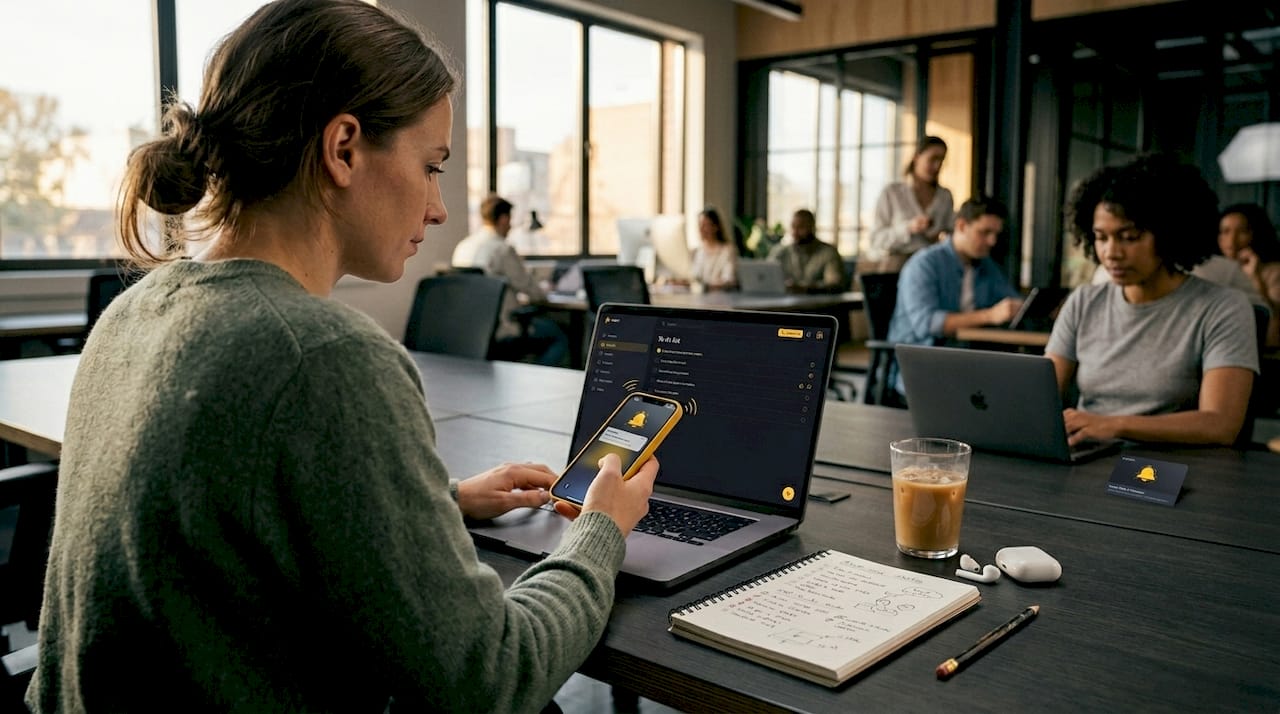
Reminders exist to offload that burden. But here's the part most people don't realize: the type of reminder matters just as much as the reminder itself. A vague notification does little to trigger the right behavior. A prospective memory reminder that matches a specific task to a specific person, at the right moment, dramatically reduces the mental work required to act on it.
Here is a summary of how targeted reminders affect real-world task performance:
| Scenario | Without role-based reminder | With role-based reminder |
|---|---|---|
| Medication adherence | 55-65% compliance | Up to 80%+ compliance |
| Bill payment on time | Frequent late payments | Near-consistent on-time rates |
| Appointment attendance | Missed appointments common | Significant reduction in no-shows |
| Shared task completion | Confusion over ownership | Clear accountability |
The cognitive science behind this is straightforward. When a reminder is labeled with your name and your specific action, your brain skips the evaluation step ("Is this for me? Do I need to do something about this?") and goes straight to execution. That saved mental energy compounds across dozens of daily decisions.
Personalized reminder strategies also reduce what researchers call "information overload," a condition where the volume of notifications becomes so overwhelming that people start dismissing all of them. When only relevant alerts reach each person, every notification carries weight.
There is also a strong link between targeted reminders and punctuality and productivity. Parents who receive timely, role-specific alerts report feeling more in control of their day and less reactive to last-minute chaos.
"The best reminder is the one that arrives at exactly the right moment for the right person, with just enough detail to trigger immediate action."
Pro Tip: Write reminder messages in action-first language. Instead of "Medication," write "Give Jacob his 2pm antibiotic." The specificity removes hesitation and makes it far easier to act immediately, especially during a busy afternoon.
Evidence: When do reminders actually work—and when do they fail?
Understanding the upside of role-based reminders is useful. Understanding their failure modes is essential. Because yes, reminders can absolutely backfire, and knowing when they fail is what separates a well-designed system from digital noise.
Research on medical adherence in the real world shows that while reminders can improve compliance, annoyance and poorly targeted alerts can cause people to ignore them entirely. The same study noted that some reminder designs can actually produce a negative response, where recipients begin to resent the nudges and actively dismiss them.
A Cochrane review on computer-generated reminders for healthcare providers found that while reminders helped, the gains were modest and outcomes did not always improve. The takeaway is clear: reminders are not a magic solution. They are a tool, and tools need to be used correctly.
Here are the top reasons reminder systems fail in busy households:
- Over-alerting: Too many notifications in a short window desensitizes everyone. After the fifth buzz of the morning, the sixth one gets swiped away without a second thought.
- Role misidentification: When a reminder goes to the wrong person, not only does the task get missed, but the correct person never even knew it was needed.
- Poorly timed alerts: A medication reminder that fires at 6am when the dose is needed at 8am does nothing except create confusion about timing.
- Too much information: Long-winded reminders get skimmed or ignored. Short, direct, role-specific messages get acted on.
- No system for updates: Life changes constantly. A reminder set in September may be irrelevant by November if schedules shifted and nobody updated the system.
Child safety scenarios are one area where reminder failure is especially costly. A reminder that fires at the wrong time or goes to the wrong parent about a child in a car or an unsupervised activity can have serious consequences.
"Even a well-intentioned reminder system can become background noise if it is not carefully tailored to who needs to know what, and when."
Pro Tip: Set a monthly "reminder review" calendar event for your household. Spend 10 minutes checking whether every active reminder is still assigned to the right person and firing at the right time. Schedules change, and your reminder system needs to keep up.
Best practices for setting up role-based reminders at home or in teams
Knowing that reminders can fail is the first step. Building a system that actually works is the next one. Fortunately, setting up an effective role-based reminder framework is not complicated. It just requires a bit of intentional planning upfront.
Research confirms that role and task differentiation with clear permission boundaries and task handovers is the foundation of any effective multi-user reminder system. In plain terms: before you set a single reminder, get clear on who does what.
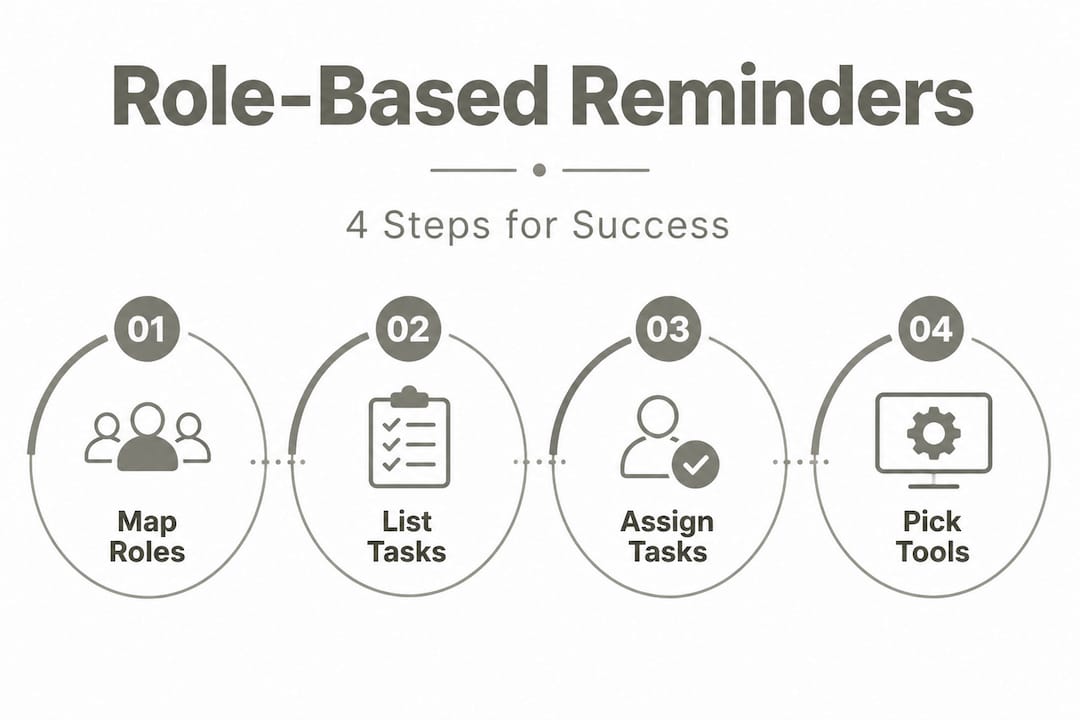
Step 1: Map out every role in your household or team. Write them down. Parent, caregiver, teenager, partner, grandparent who helps on Wednesdays. Every person who has recurring responsibilities gets a defined role.
Step 2: List the recurring tasks for each role. This includes daily tasks like medication administration, weekly tasks like garbage day or bill payments, and monthly tasks like credit card due dates or school fee deadlines.
Step 3: Assign each task to one specific role. Not two people. One. Shared ownership is a recipe for the "I thought you handled it" conversation. When a task belongs to a role, accountability is clear.
Step 4: Choose a platform that supports role-based assignment. Not all reminder apps allow this. Look for tools that let you assign alerts to specific users, set different visibility settings per person, and send targeted notifications rather than group blasts.
Step 5: Set a review schedule. Life changes. Back-to-school season reshuffles everything. A new job changes who is home at what time. A good multi-reminder system setup includes periodic reviews to keep the system current.
Here are the core do's and don'ts for building your system:
- Do: Write action-oriented reminder text for every task
- Do: Assign one role per task so there is no ambiguity
- Do: Set reminders at the moment the action is needed, not hours before
- Do: Use a platform that supports important document reminders as part of your overall system
- Don't: Send every reminder to the whole household
- Don't: Set so many reminders that people start ignoring all of them
- Don't: Copy the same reminder system you use at work into your home without adjusting for family dynamics
- Don't: Set it and forget it; always build in a regular review
Pro Tip: When big life transitions happen like starting school, a new baby arriving, or a family member moving in, do a full role-task audit. Updating your reminder assignments during these transitions prevents the chaos that usually follows life changes. You can also explore daily habit checklists as a complement to your reminder system for tasks that benefit from a visual tracking layer.
Our perspective: What most people miss about role-based reminders
Here is the uncomfortable truth that even experienced household organizers tend to overlook: reminders do not fix a broken system. They amplify whatever is already there.
If your household has unclear task ownership, vague communication, and no real accountability structure, adding more reminders to the mix will just produce more noise. You will have a louder version of the same problem. We have seen this pattern again and again with families who come to Remoe after years of trying every app on the market. The issue was never the reminder tool. It was the lack of a role structure underneath it.
A Cochrane review found clearly that reminders should complement, not replace, broader time-management and care systems. That finding applies just as much to families as it does to healthcare teams.
The "reminder mindset," where you try to solve every organizational problem by adding another notification, is one of the most common traps we see. It creates over-reliance. People stop planning because they assume the app will catch everything. It will not. Apps fail. Notification permissions get toggled off. Phones die.
Our strong view is this: design the handoffs first, then add reminders to support them. Sit down with your household once a month. Talk about what worked, what slipped, and who is carrying too much. Then go into your smart alert settings and update accordingly. Reminders are the final layer of a well-designed system, not the foundation of one. When you treat them that way, they become genuinely powerful rather than just another source of notification fatigue.
How ReMoe makes role-based reminders simple
Putting all of this into practice requires the right tool, and that is exactly what Remoe was built for.
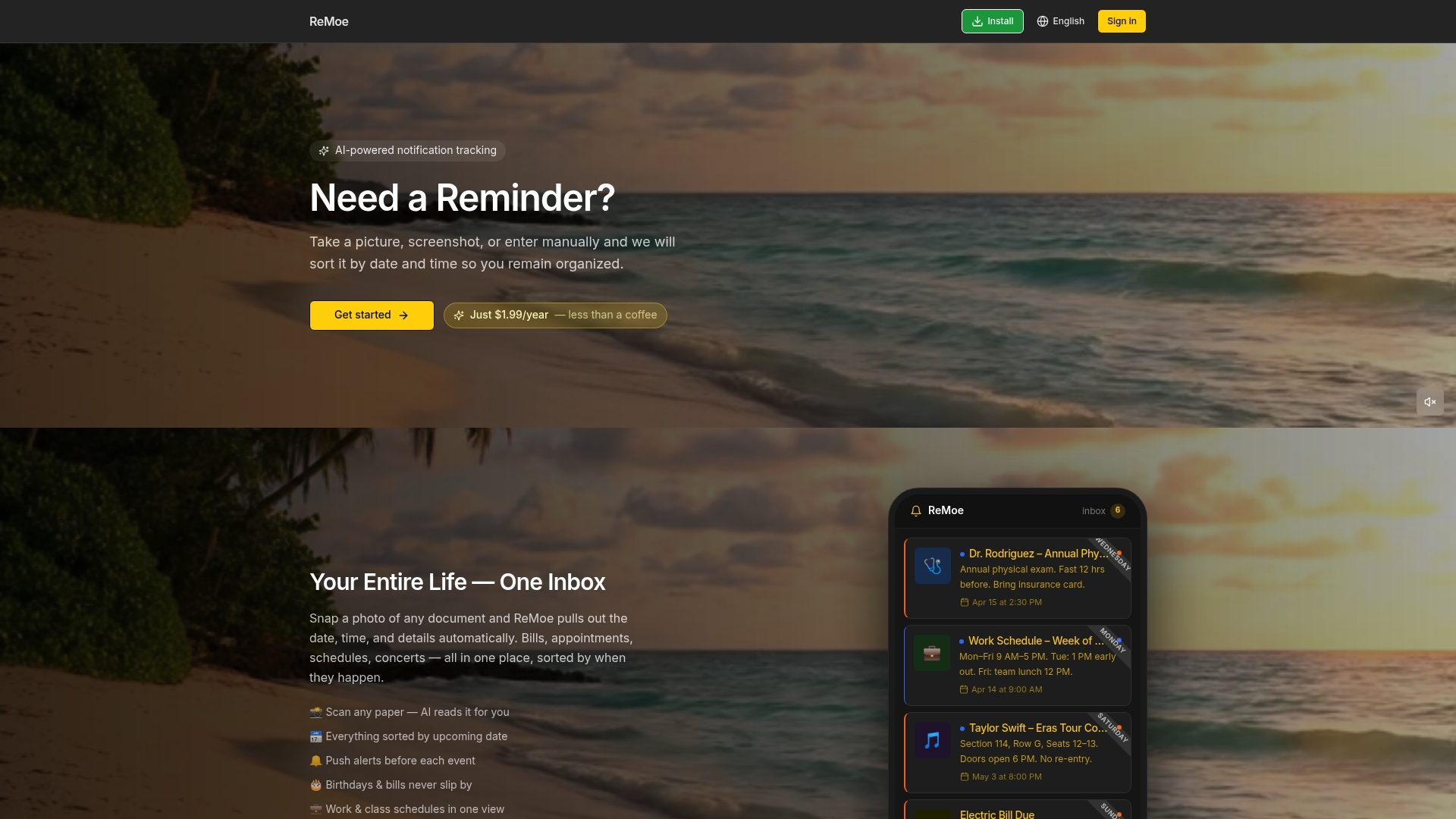
Remoe lets you assign reminders by role, customize alert timing and message content for each person, and keep everything, medication schedules, bill due dates, school pickups, appointment alerts, in one place. You do not need five separate apps for five different categories of your life. Why choose Remoe comes down to one thing: your whole life, organized by role, in one place. Getting started is simple, and you can check out Remoe's pricing to find the plan that fits your household. If you want to see the full feature set before committing, the Remoe promo page walks you through everything you need to know. The right reminder at the right time for the right person changes everything.
Frequently asked questions
What is a role-based reminder?
A role-based reminder sends task alerts to the right person based on their specific responsibility, so reminders align with the right actor and avoid unnecessary notifications for everyone else.
Do role-based reminders improve medication or appointment adherence?
Studies show reminders can improve adherence in real-world settings, but effectiveness depends heavily on the design, the individual, and the context in which the reminder is delivered.
Can reminders be too frequent or annoying?
Yes. Research confirms that some reminder designs backfire through annoyance, which leads people to ignore the alerts entirely, defeating the purpose of having them.
Are role-based reminders enough to stay organized?
Reminders are a powerful support tool, but reminders should complement broader planning and communication habits rather than replace them entirely.
What roles can benefit from personalized reminders?
Roles and tasks should be differentiated across any multi-person household or team, meaning parents, caregivers, children, spouses, and work teammates all benefit from reminders tailored to their unique responsibilities.