
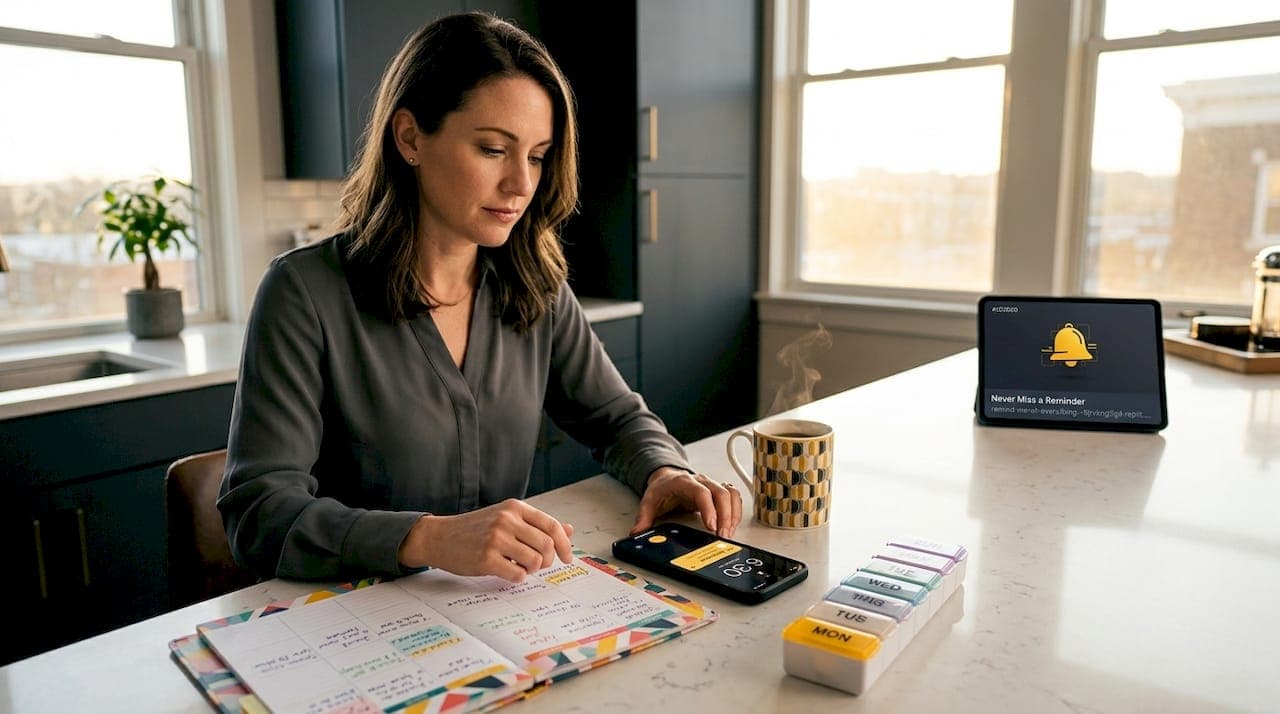
Forgetting to pick up a child, missing a medication dose, or letting a bill slip past its due date are not signs of carelessness. They are signs of a life with too many moving parts and not enough reliable systems to support them. Families juggle school pickups, sports practices, work deadlines, and doctor appointments all at once, while older adults manage complex medication schedules with little margin for error. A well-designed reminder system does not just ping you once and hope for the best. It fits your routine, scales to your household, and actually sticks. This article walks you through nine practical, evidence-backed examples you can use starting today.
Table of Contents
- Criteria for effective reminders
- Classic reminder tools: Alarms, notifications, and organizers
- Digital solutions: Apps, smart devices, and caregiver alerts
- Habit stacking: Using routines as reminders
- Special cases: Irregular schedules and backup reminder processes
- What most reminder guides miss: Matching interventions to your real problem
- Effortless reminders: Take the next step with ReMoe
- Frequently asked questions
Key Takeaways
| Point | Details |
|---|---|
| Layer reminders | Combine alarms, notifications, and physical organizers for maximum reliability. |
| Leverage family sharing | Shareable lists and assignable alerts help families stay coordinated and accountable. |
| Use habit stacking | Link new actions to existing routines so reminders become automatic. |
| Smart devices add accountability | Apps and smart tools monitor and escalate reminders, making them effective for busy or elderly users. |
| Backup processes for complexity | For irregular schedules or cognitive challenges, add layered reminders and caregiver oversight. |
Criteria for effective reminders
Before reviewing specific tools and techniques, it helps to understand what separates a reminder that works from one you will dismiss after two days. Not all reminders are created equal, and choosing the wrong format for a task is one of the most common reasons people abandon systems that could otherwise serve them well.
A reliable reminder shares four core qualities: visibility, timing, recurrence, and shareability. Visibility means the reminder appears in a place and format you cannot ignore. Timing means it fires at the moment you actually need to act, not an hour before or after. Recurrence means it repeats automatically for routine tasks so you never have to reset it. Shareability means other people in your household can see, accept, or act on it.
Matching the method to the task matters just as much as the tool itself. A simple phone alarm works beautifully for a morning medication routine, but it falls apart when you need your partner to know the kids need picking up at 3:15 p.m. For that, you need something assignable. Multi-reminder systems that let you delegate tasks across a household dramatically reduce the mental load on any single person.
Key qualities of an effective reminder:
- Fires at the right moment, not just the right general time
- Repeats automatically for daily or weekly tasks
- Visible to everyone who needs to act
- Easy to set up and even easier to check off
Pro Tip: Layer recurring reminders with assignable features. When shareable, recurring reminders are combined with task assignment, families distribute responsibility instead of piling it all on one person.
Classic reminder tools: Alarms, notifications, and organizers
Armed with those criteria, let's explore the classic tools that have stood the test of time. These are the methods most households already have access to, and when used correctly, they deliver consistent results without requiring any technical setup.
Phone alarms are the most widely used reminder tool on the planet. Their power lies in simplicity. You set a time, assign a label, choose recurrence, and you are done. The label matters more than most people realize. Instead of a generic alarm titled "Reminder," name it "Blood pressure pill with breakfast" or "Leave for school now." That specificity turns a vague buzz into a clear instruction.
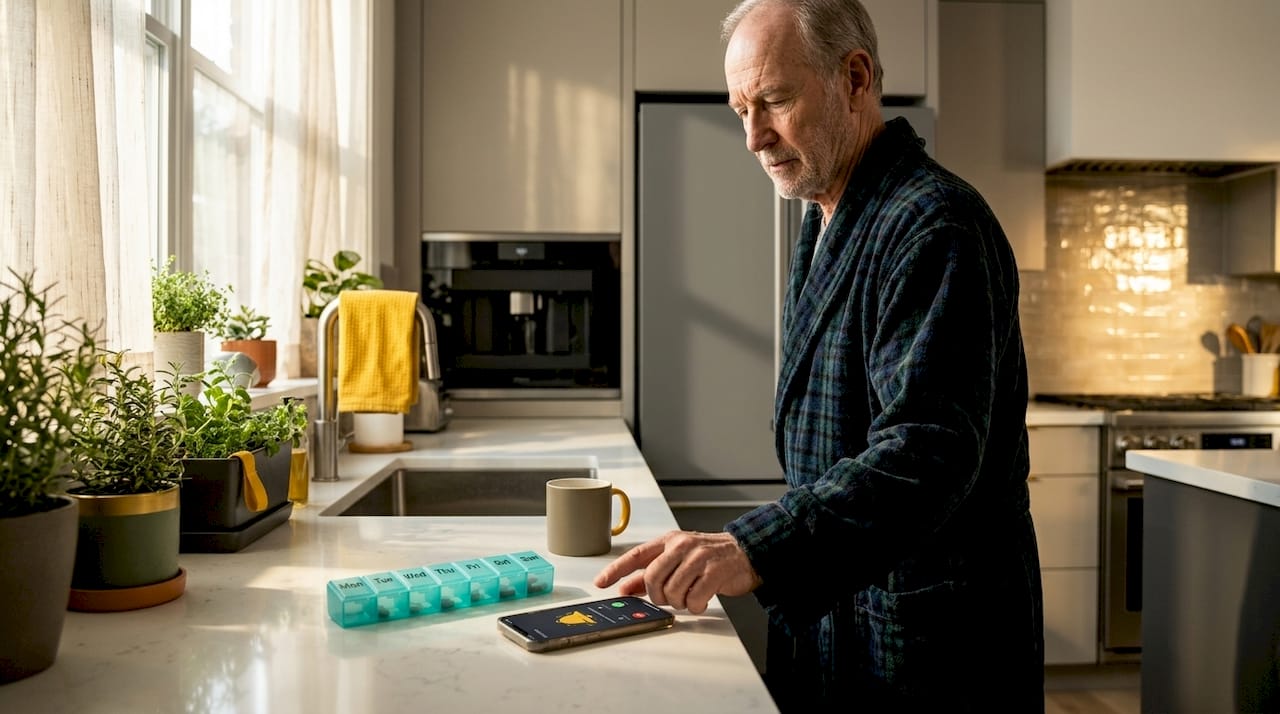
Pill organizers remain one of the most effective physical tools for medication management. Color-coded compartments sorted by day and time of day give users an instant visual cue: if Tuesday evening's compartment is still full at bedtime, the dose was missed. Recurring phone alarms paired with labeled pill organizers represent one of the most dependable combinations for medication adherence, especially for seniors living independently.
Reminder packaging takes the pill organizer concept a step further. Medication blister packs printed with the day and time of each dose reduce guesswork entirely. Research shows that reminder packaging improves adherence in long-term medication users, although average effects can be modest when packaging is used without additional support.
| Tool | Best for | Pros | Cons |
|---|---|---|---|
| Phone alarm | Daily medication, wakeup | Free, always available | Easy to dismiss |
| Pill organizer | Weekly medication sorting | Visual confirmation | Manual refill needed |
| Reminder packaging | Long-term prescriptions | Built-in structure | Requires pharmacy coordination |
| Written calendar | Appointments, bills | No battery required | Not portable, no alerts |
Explore more medication reminder strategies to find the combination that fits your situation.
Pro Tip: Pair a phone alarm with a physical organizer. The alarm triggers action, and the organizer confirms whether you actually completed it. Two layers beat one every time.
Digital solutions: Apps, smart devices, and caregiver alerts
While traditional tools serve many needs, digital solutions can offer extra convenience and accountability, especially when the stakes are high or multiple people are involved in managing someone's care.
Smart pill bottles represent the next evolution of physical organizers. These devices track when the bottle is opened, send alerts when a dose is overdue, and notify designated caregivers when a person has not responded. Research shows that smart pill bottle reminders can meaningfully improve measured adherence in randomized studies, though results vary based on the user's baseline habits and the specific device design.
Family reminder apps solve the coordination problem that no single alarm can address. When a parent sets a reminder for a school pickup, the whole family sees it. When a caregiver confirms a medication was taken, the system updates in real time. These platforms use assignable, recurring alerts that notify helpers automatically when a dose or task is missed, removing the need for constant phone check-ins.
All-in-one reminder apps reduce fragmentation, one of the biggest hidden costs of managing multiple reminder systems across different platforms.
| Method | Best for | Escalation | Family access |
|---|---|---|---|
| Smart pill bottle | Elderly individuals | Yes, caregiver alerts | Limited |
| Family reminder app | Households with children | Notification chains | Full group access |
| Manual phone calendar | Simple recurring events | None | Shared calendar only |
| Dedicated reminder app | All-purpose daily tasks | Customizable | Yes |
Features to prioritize in a digital solution:
- Automatic escalation when a task goes unchecked
- Group notifications for shared responsibilities
- Recurring schedules with flexible timing
- Easy setup for non-technical users
Personalized smart alerts take this a step further by adapting reminder timing to your personal patterns, reducing alert fatigue over time.
Pro Tip: For elderly family members or a busy household with young children, choose tools that include automatic escalation. If Grandma does not confirm her noon medication by 12:30, her caregiver gets a text. That single feature provides enormous peace of mind.
Habit stacking: Using routines as reminders
Beyond alarms and apps, simple behavioral techniques can turn everyday moments into lasting reminders. This approach requires no device, no subscription, and no battery. It just requires a clear understanding of what you already do every day.
Habit stacking is a behavioral technique that links a new action to an existing routine. The existing habit becomes the cue. Because your brain already fires the neural pathway for the familiar action, it becomes easier to attach the new behavior immediately after it.
"The most reliable reminder is one you do not need to set. By anchoring a new task to something your body already does on autopilot, you remove the cognitive effort of remembering entirely." This is the core insight behind habit stacking as a reminder strategy.
Here is how to build a habit stacking system for your daily tasks:
- Write down your non-negotiable daily routines. Think brushing teeth, making coffee, locking the front door, feeding a pet.
- Identify the tasks you keep forgetting. Morning medication, vitamins, filling a water bottle, reviewing the day's schedule.
- Pair each forgotten task with a cue habit. Medication after brushing teeth. Vitamins while the coffee brews. Schedule review while waiting for the kettle.
- Place a physical cue at the location. Put your pill organizer next to your toothbrush. Put your vitamins beside the coffee maker. The environment reinforces the stack.
- Track it for two weeks. Consistency in the first two weeks locks in the association. After that, it becomes genuinely automatic.
The punctuality benefits of routine-based reminders extend beyond individual tasks. When your whole morning flows on a habit stack, you leave the house on time with everything you need.
Special cases: Irregular schedules and backup reminder processes
Not all reminders fit simple patterns. Let's explore expert protocols for complex or vulnerable situations, because some families and individuals face challenges that go beyond a standard alarm or pill organizer.
Shift workers, caregivers with fluctuating schedules, and individuals managing cognitive decline all need layered systems. A single alarm on a phone simply cannot carry the full weight of safety and reliability in these situations.
For those with irregular schedules, caregiver check-ins and backup reminders are essential. If a person's daily pattern changes constantly, anchor cues lose their effectiveness and digital systems need human backup. Cognitive impairment in particular requires reminders to come from multiple directions simultaneously.
Layered strategies for special cases:
- Phone call check-ins at consistent times, even when schedules vary
- Text message alerts from a caregiver app when a task goes unconfirmed
- Backup person protocol: a second contact who receives an alert if the first reminder goes unacknowledged
- Visual cues placed in high-traffic areas: a note on the refrigerator, a pill organizer beside the bathroom sink
- Emergency escalation: for high-stakes medications, a third-party notification service that contacts a physician or emergency contact
These reminder safety strategies are especially relevant for parents of young children and families caring for aging relatives. The consequences of a missed cue are not just inconvenient, they can be serious.
Using a multiple reminders approach ensures that no single point of failure can cause a task to slip through.
Pro Tip: Combine at least two types of reminders for high-stakes situations. A digital alert paired with a human check-in is more reliable than either method alone, especially when cognitive decline or high-frequency missed doses are involved.
What most reminder guides miss: Matching interventions to your real problem
By now, we have covered a spectrum of reminder options, but here is the insight most advice overlooks. The real question is not "which reminder is best?" The real question is "why am I missing this task in the first place?"
Most reminder guides treat forgetfulness as the only failure mode. But in practice, people miss medications for very different reasons. Some forget entirely. Others remember but feel too fatigued or nauseated to take the medication. Some simply run out and do not refill in time. Others avoid a dose because of a side effect they have not mentioned to their doctor. A reminder alarm does nothing for any of those situations except the first one.
Research confirms this nuance directly. Evidence shows that reminder packaging has only modest average effects when applied broadly, because the packaging addresses forgetfulness but not the other failure modes. If the real barrier is a side effect, a louder alarm makes no difference.
This same logic applies to every task a family manages. If your child keeps missing the school bus, the issue might not be a missing alarm. It might be that getting dressed takes longer than expected, or that the morning routine has too many competing demands. Fixing the sequence of the morning matters more than adding another notification.
The practical takeaway is this: before you layer on more reminders, spend five minutes diagnosing why tasks are actually being missed. Talk to the fixing missed medications question directly. Is it timing? Motivation? Access? Once you identify the real gap, you can choose the right intervention instead of the most popular one.
A reminder system is only as good as its fit with your actual life. Generic solutions applied to specific problems will always underperform.
Effortless reminders: Take the next step with ReMoe
Managing school schedules, medication timing, bill due dates, and family tasks across multiple people is genuinely difficult. The good news is that you do not have to piece together a dozen different tools to stay on top of it all.
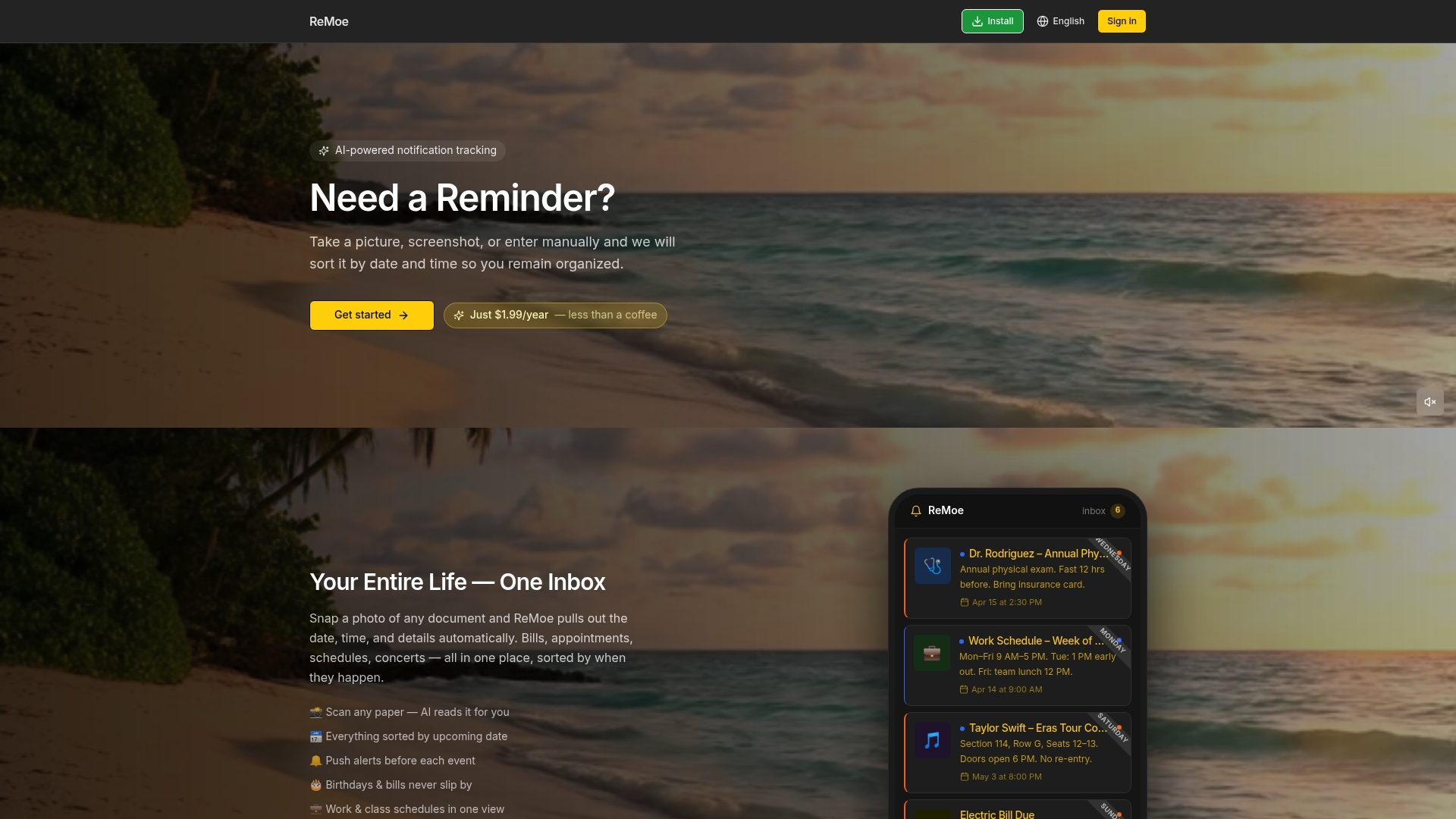
ReMoe puts your whole life in one place. From medication reminders to recurring bill alerts to school schedule notifications, the ReMoe app is built specifically for individuals and families who need a system that is easy to set up and impossible to ignore. Assignable reminders mean the right person gets the right alert at the right time, every time. With flexible ReMoe pricing designed for real budgets, getting started is straightforward. If you are ready to stop relying on memory and start relying on a system that actually works, never miss a reminder again.
Frequently asked questions
What are the best everyday reminders for medication?
Phone alarms and labeled pill organizers are the most reliable combination for medication reminders, especially for seniors and people managing multiple prescriptions.
How can families ensure no task is forgotten?
Shareable, assignable reminder lists distribute responsibility across household members, so no single person has to carry the entire mental load of tracking family tasks.
What is habit stacking and how does it work for reminders?
Habit stacking ties a new task directly to an existing routine, making the familiar behavior act as a built-in cue so the new action becomes automatic over time.
Are smart devices more effective for reminders?
Smart reminder devices can meaningfully improve adherence in structured settings, but their effectiveness depends heavily on the user's habits and how consistently the device is used.
What if someone has an irregular schedule or memory challenges?
Layered reminders including caregiver alerts are the most reliable approach, combining digital notifications with personal check-ins so no single missed cue causes a task to fall through.