

One overlooked bill can quietly snowball into a cascade of late fees, service shutoffs, and even a damaged credit score before you realize anything went wrong. For busy families and caregivers juggling school schedules, medications, and daily responsibilities, missed payments can cause far more disruption than most people anticipate. The good news is that with the right reminder systems and organizational habits in place, you can stop these lapses entirely. This article walks you through exactly how to do that.
Table of Contents
- Understanding the impact of missed bills
- Why organization matters: Preventing lapses before they start
- Choosing the right reminder system for your needs
- Applying proven strategies to stay on top of bills
- Why most reminder solutions fail—and what actually works
- How ReMoe makes reliable reminders effortless
- Frequently asked questions
Key Takeaways
| Point | Details |
|---|---|
| Missed bills create real risks | Late fees and service interruptions impact both finances and family harmony. |
| Organization prevents lapses | Structured reminders and clear routines reduce errors and oversight. |
| Layer reminders for reliability | Using multiple, role-based, and confirmation alerts ensures nothing gets missed. |
| Automated tools outperform manual | Apps and smart systems adapt to family needs and free up mental space. |
| Caregiver alert systems are vital | Extra layers and confirmations protect vulnerable household members. |
Understanding the impact of missed bills
After highlighting the risks of missed bills, let's explore their concrete impact on your finances and daily life.
A single late payment on a credit card can trigger a penalty fee anywhere from $30 to $41, and if it goes past 30 days, it shows up on your credit report. That mark can lower your credit score by as many as 100 points in some cases, which affects your ability to get a loan, rent an apartment, or even secure certain jobs. What looks like a minor slip has very real, very measurable consequences.
Beyond the financial penalties, missed bills create an emotional ripple effect inside households. Arguments over who was supposed to pay the electric bill or who forgot to renew the car insurance are far more common than people admit. That friction erodes trust and adds unnecessary stress to relationships that already carry the weight of busy modern life.
Here is a breakdown of the most common types of missed bills and what they typically cost:
| Bill type | Average late fee | Service interruption risk | Credit impact |
|---|---|---|---|
| Credit card | $30 to $41 | No | Yes, after 30 days |
| Utility (electric/gas) | $10 to $25 | Yes, after 30 to 60 days | Rarely |
| Internet/cable | $10 to $15 | Yes, after 30 days | Rarely |
| Rent/mortgage | $50 to $150+ | Yes (eviction risk) | Yes, after 30 days |
| Insurance | $15 to $25 | Yes (policy lapse) | Yes, for auto loans |
| Subscription services | None to $10 | Yes (service cut) | No |
For families with older adults in the home or caregivers managing finances on behalf of someone else, the risk multiplies. As older adults and caregivers often need an additional layer of reminders because missed payments can occur when others don't notice problems until after the damage is done. This is especially true when cognitive changes, health events, or communication gaps exist between family members.
The hidden cost nobody talks about is the mental load. Constantly worrying about whether a bill was paid, double-checking bank statements, and keeping dozens of due dates in your head without support is exhausting. That's exactly where all-in-one reminders become a game changer, and where role-based reminders can redistribute that responsibility more fairly across a household.
Key consequences you need to keep in mind:
- Late fees accumulate quickly, often without any warning from the service provider
- Credit damage from missed payments takes months or even years to repair
- Service interruptions can affect everything from internet access for school to heat in winter
- Policy lapses in insurance leave you legally and financially exposed
- Increased anxiety from unpaid bills affects sleep, focus, and productivity
Why organization matters: Preventing lapses before they start
Now that you know what's at stake, let's uncover how better organization can stop missed bills before they happen.

Organization is not a personality trait. It's a system. And systems can be built, adjusted, and improved by anyone, regardless of how scattered they feel right now. The key is shifting from reactive behavior (paying bills when you remember them) to proactive habits (being reminded before due dates arrive).
Structured reminder systems act like a safety net stretched underneath your entire financial life. They catch what you might drop. For households managing five, ten, or even fifteen recurring bills per month, the idea that anyone could reliably track all of them mentally is unrealistic. Older adults and caregivers in particular benefit when systems are layered, because a single missed notification isn't enough to guarantee awareness.
Consider the power of a multi-reminder system built around your actual life. Instead of one alert three days before a bill is due, you receive a reminder seven days out, another three days out, and a final confirmation on the due date itself. That layering creates redundancy, and redundancy is what prevents bills from slipping through.
Pro Tip: Audit your recurring bills once a month. Write down every bill you pay, its due date, and the method you use to remember it. You will almost certainly find at least one bill that has no real reminder attached to it. That's your most vulnerable point.
Here's what makes a well-organized bill reminder system effective:
- Visibility: Every bill is listed somewhere you actively check, not buried in email
- Timing: Reminders arrive far enough in advance to allow action, not the day after the due date
- Redundancy: Multiple alerts ensure that one missed notification doesn't cause a missed payment
- Accountability: Someone in the household is clearly assigned to each bill
- Confirmation: You receive confirmation that the payment went through, not just that it was due
Families dealing with tight budgets especially need early warnings. Getting a reminder seven days out gives you time to move money between accounts, request extra hours at work, or make arrangements. A same-day reminder offers almost no flexibility. That timing difference is where multiple reminder tips make a real, tangible impact on household stability.
Choosing the right reminder system for your needs
With the importance of reminders clear, let's compare the tools and systems available to keep everyone on track.
Not all reminder systems are created equal, and the best one depends on who you are, how your household operates, and how many bills you're managing. A single adult with five recurring bills needs something different from a family of four managing utilities, school fees, insurance, and subscriptions.
Here's a comparison of the most common reminder systems:
| System type | Best for | Key advantage | Key limitation |
|---|---|---|---|
| Paper calendar | Simple households | Free, no tech required | Easy to overlook or lose |
| Phone calendar alerts | Individuals | Built-in, easy to set up | No family sharing, limited customization |
| Sticky notes | Visual learners | Immediate visibility | Easily ignored over time |
| Checklist apps | Organized individuals | Simple tracking | Lacks automated reminders |
| Smart reminder apps | Families and caregivers | Layered alerts, role-based, shareable | May require a subscription |
| Bank autopay | Fixed monthly bills | Automatic, no action needed | Doesn't cover all bill types |
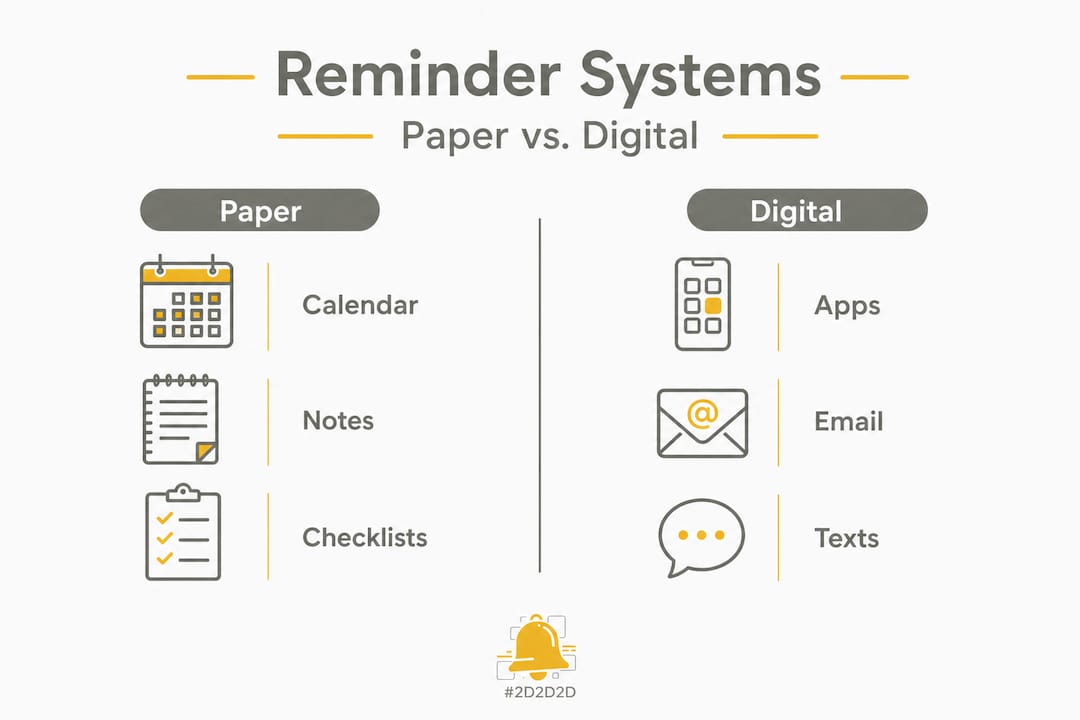
Personalized reminders take things a step further by adapting to your specific schedule and preferences. Instead of generic alerts, you receive notifications tuned to your routine. For caregivers managing bills on behalf of elderly parents or family members with health challenges, this kind of customization is essential.
Steps to choose the right system for your household:
- List every recurring bill. Include amounts, due dates, and who is responsible for paying each one.
- Assess your tech comfort level. Choose a system that you and every relevant household member will actually use.
- Identify your highest-risk bills. These are bills with the most severe consequences if missed, like rent, mortgage, and insurance.
- Build in redundancy for high-risk bills. Use at least two types of reminders for anything that could seriously hurt you if missed.
- Assign ownership. Every bill should have one designated person responsible for confirming payment.
- Set up confirmation alerts. Don't just remind yourself to pay. Confirm that payment actually went through.
The document reminder process is also worth building out for bills that aren't monthly. Annual insurance renewals, property tax payments, and vehicle registrations are easy to forget because they don't show up regularly in your memory. Add them to your system now, even if they're months away.
As caregivers and families with older adults demonstrate, the most successful reminder systems include multiple touchpoints because no single alert is reliable on its own.
Applying proven strategies to stay on top of bills
After reviewing the tools, let's dive into real-world strategies to ensure bills and tasks never slip through the cracks.
Knowing that reminders help is one thing. Actually building a system that holds up under the pressure of daily life is another. These strategies are practical, tested, and designed to work even on your most chaotic days.
Layer your reminders intentionally. For any bill with a consequence you can't easily absorb, set three reminders: one week before, two to three days before, and on the due date. This gives you three opportunities to catch the obligation before it becomes a problem. Punctuality reminders work on the same principle. Getting ahead of the deadline frees up mental space and removes the last-minute scramble.
Assign clear roles in your household. If two adults share financial responsibilities but both assume the other is handling things, bills fall through. Decide explicitly who owns each bill, and build reminders tied to that person's phone or preferred channel. Families who implement reminders for children's schedules and household tasks often find that the same structure applies beautifully to bills.
Key strategies for consistent bill management:
- Set recurring reminders once so they repeat automatically every month
- Use a shared family calendar or app so everyone can see what's due and who is handling it
- Create a "bill payment ritual," such as every Sunday evening reviewing the coming week's obligations
- Review your bank account after every payment to confirm it cleared
- Group bills with similar due dates together to minimize the number of reminder events you need
Pro Tip: If you're caring for an elderly parent or managing bills for someone else, set up a secondary confirmation system. For example, after you pay a bill on their behalf, send a quick text or message to them confirming it was handled. This creates a two-person accountability loop that is far more reliable than memory alone.
The most successful households treat bill management like any other important routine. It's not something you think about occasionally. It's something built into the week, supported by tools, and shared across the people who are responsible.
Why most reminder solutions fail—and what actually works
Here's the uncomfortable truth about most reminder systems: they're designed for ideal conditions. They assume you'll see the notification, have time to act on it, and remember what to do. Real life doesn't work that way.
Most single-reminder systems fail because they depend on one moment of attention. If you're driving, in a meeting, or dealing with a child's emergency when that single alert fires, it's gone. You told yourself you'd handle it later, and later never came. That's not a personal failing. That's how attention works under pressure.
The "set it and forget it" mindset with autopay is also riskier than people realize. Autopay works beautifully until the card on file expires, your bank account is short, or a billing error occurs. Without an active confirmation reminder, you might not know a payment failed until a service gets cut or a late fee appears. Simplifying reminders doesn't mean reducing them to one. It means making a layered system feel effortless.
The families and individuals who stay consistently organized share three habits. First, they use layered reminders rather than single alerts. Second, they assign clear ownership so nothing lives in shared ambiguity. Third, they confirm payment completion rather than assuming it happened. That third habit is the most overlooked, and it's often the difference between catching a failed payment early and discovering it thirty days later.
As the research on daily organization strategies confirms, building redundancy into your reminder system isn't overcautious. It's the baseline for reliability. And for caregivers who manage bills for older adults who need additional layers of reminders because missed payments aren't noticed until after damage occurs, this isn't optional. It's essential.
The real win isn't just avoiding late fees. It's the quiet confidence of knowing your financial obligations are covered, your family is organized, and nothing important is falling through the cracks. That peace of mind is worth building a real system for.
How ReMoe makes reliable reminders effortless
Managing bills, medications, school schedules, and family tasks shouldn't require a spreadsheet and three different apps. ReMoe brings everything into one place so nothing slips through.

With ReMoe, you get AI-powered reminders that adapt to your schedule and your household's needs. Whether you're an individual tracking a dozen recurring bills or a caregiver managing responsibilities for the whole family, ReMoe's reminder system is built to match real life. You can explore special promotional options to get started today, and if you want to see exactly what's included, check out the available pricing plans. Your whole life, organized in one place, with reminders that actually show up when you need them.
Frequently asked questions
What are the most common consequences of missing a bill?
The most common consequences include late payment fees, service interruptions, and negative impacts on your credit score. Missed payments can cause significant financial and logistical disruption, especially when they go unnoticed for 30 or more days.
How can reminder apps help families and caregivers?
Reminder apps create layered alerts and confirmations so payments aren't missed even when multiple people are involved. Caregivers benefit from layered reminders and confirmations because problems often go unnoticed until damage has already occurred.
What types of reminders work best for busy households?
Layered reminders, role-based notifications, and text confirmations are most effective for busy families. Busy households benefit most from systems that assign clear ownership and deliver multiple alerts before each due date.
Can automated reminders reduce stress?
Yes, automated reminders free up mental space so you can focus on more important tasks. According to why all-in-one reminders work, centralizing alerts reduces cognitive load and makes daily life feel more manageable.
Is there a risk with relying only on one type of reminder?
Relying on a single reminder method can lead to oversights, especially when life gets busy and notifications get missed. Layered reminders are significantly more reliable than any single alert because they create multiple opportunities to catch and act on a due payment.